
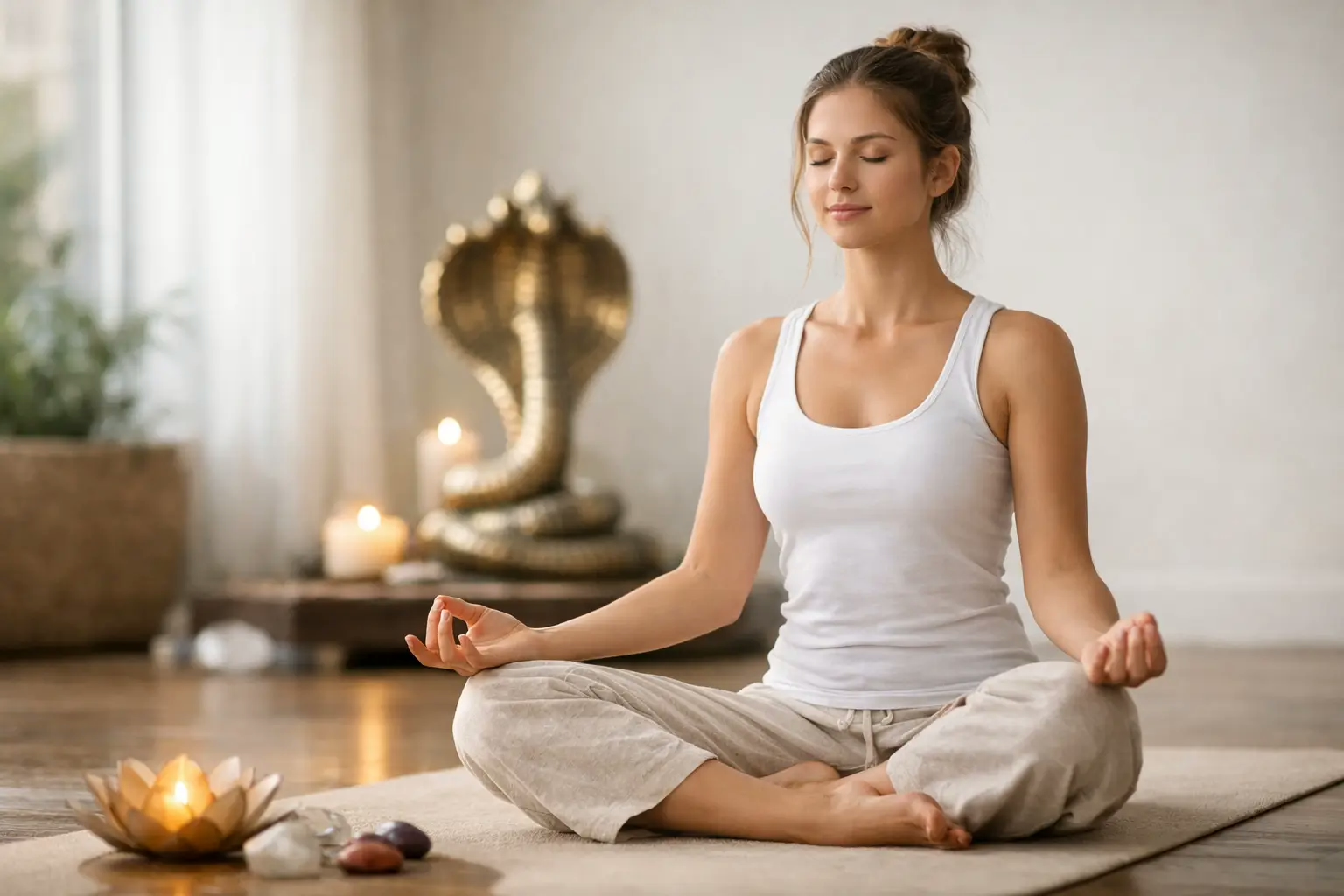
The call of the kundalini is often recognized by a simple detail: the mind is spinning without pause, the body is tense, and despite good resolutions, something inside is calling for more than a moment’s relaxation. Kundalini for beginners is not a quest for performance, nor an esoteric practice reserved for the initiated. Above all, it’s an encounter with breath, body and energy, in a setting that respects your own rhythm.
When you’re just starting out, you may be attracted by the promise of transformation and, at the same time, feel intimidated by the images that surround this practice. However, when properly accompanied, kundalini can become a very concrete space for nervous system regulation, emotional release and inner reconnection. The starting point is not to experience something extraordinary. The starting point is to learn to feel in safety.
Kundalini for beginners: what are we really talking about?
Kundalini is often described as a vital energy present in everyone. In practice, this translates less into an abstract idea than into a living experience: conscious breathing, movements, postures, sounds, meditation and integration time. The aim is not to force a surge of energy, but to create the conditions for a deeper rebalancing between body, breath and inner space.
For a beginner, it’s useful to lay down a simple foundation. A kundalini session is not about “achieving” complex postures. Rather, it’s an invitation to move through a precise sequence that affects energy circulation, emotional state and quality of presence. Some practices are dynamic, others highly meditative. Some open up, others soothe. It all depends on the intention, the moment and the body’s capacity to receive.
This is where an important nuance comes in. Kundalini can be profoundly sustaining, but it is not neutral. It mobilizes energy, sometimes emotions, sometimes long-contained areas of tension. For this reason, starting gently is often the right way to go.
Why is this practice so attractive today?
Many people come to kundalini after trying to “hold on” for months or years. They’ve developed seemingly effective strategies, but feel disconnected from their bodies, tired inside, or as if cut off from their own momentum. Kundalini is attractive because it doesn’t just work on ideas or willpower. It works through breath, feeling and presence.
This approach is particularly suited to those who want more than just a wellness break. It can help calm inner turmoil, loosen emotional rigidities and restore clarity. But let’s be honest: the effects are not the same for everyone. For some people, the first sensation will be an immediate sense of calm. For others, it will be a more refined awareness of the stress or resistance already present.
In other words, feeling more alive doesn’t always mean feeling better in the minute. Sometimes it starts with feeling more clearly what needs to be listened to.
What a first session can do for you
The first kundalini experience is often surprising in its simplicity. One expects something spectacular, and discovers a very grounded work: breathing in a certain way, holding a posture, moving with awareness, repeating a sound, then observing what happens inside.
Feelings vary from person to person. You may feel warmth, tingling, deep relaxation, an emotion rising up, or simply a great calm. You may also feel almost nothing at first, and that’s just as valid. Experience is not measured by intensity. It’s measured by the quality of presence you develop, session after session.
In a safe environment, these practices offer a rare space: one where you don’t need to constantly correct yourself. The body can relax. The breath can find its place. And for a moment, the mind stops carrying the load.
What’s normal at first
When starting out, it’s common to wonder if you’re doing the right thing. This question is almost universal. In reality, kundalini requires less perfection than listening. It’s normal to have to tame certain breathing rhythms, to tire a little in certain postures, or to be emotionally affected by a very simple practice.
It’s also normal to need time to integrate. A well-executed session sometimes takes effect long after it’s over. You may feel very clear, very calm, or on the contrary a little sensitive for a few hours. That’s why progressiveness counts as much as the practice itself.
The possible benefits of kundalini
Kundalini is often sought for its effect on energy, but its most valuable benefits are sometimes more subtle. Many describe a feeling of regained inner space. Breath becomes freer. The body relaxes. Thoughts lose their grip. You feel more present to yourself.
On an emotional level, this practice can encourage a gentle form of release. Not by forcing expression, but by allowing what was being held back to flow in a different way. For people with high mental demands, this can be a deeply restorative experience. At last, the nervous system receives a different signal: it doesn’t have to be on constant alert.
Over time, some people also experience better sleep quality, more inner stability, clearer intuition and a greater ability to set limits. Again, it all depends on frequency, personal context and coaching.
Precautions to know before you start
When we talk seriously about kundalini, we also talk about safety. An energy practice can be wonderfully transformative when adapted, and destabilizing if too intense, too rapid or poorly supervised. This is particularly true for people going through a period of great emotional fragility, deep exhaustion, or with a history of trauma.
This does not mean giving up. It means choosing a respectful, progressive and humane framework. Good coaching doesn’t try to impress. It observes, adjusts and makes room for your actual experience. It helps you distinguish between what opens you up and what overloads you.
If you have any doubts, the most important thing is to discuss them before you start. A serious practice adapts to the person, not the other way round.
How to start kundalini gently
To get into the swing of things, it’s best to focus on regularity rather than intensity. A guided, clear and well-contained session is often better than an accumulation of random exercises. The body needs reference points. So does the nervous system.
Start with the simplest idea possible: observe your breath, feel your anchor, and be honest about how you feel on the day. If you’re very tired, a gentle practice will be more beneficial than an over-stimulating session. If you’re feeling scattered, a short but focused sequence can already make a real difference.
For beginners, it’s often useful to practice at times when you won’t be interrupted, with a few minutes of quiet afterwards. This integration time is precious. It allows the body to assimilate what has been set in motion.
Should you practice alone or accompanied?
It all depends on your temperament and experience. Some people like to start alone, with a short breathing or meditation practice. Others need a reassuring presence to feel sufficiently confident. In either case, the most important thing is not to rush things.
Being accompanied at the outset often offers real support. It allows you to ask questions, respect your limits, and receive a framework that contains the experience. In an integrative approach such as that offered by Just Breathe Geneva, kundalini is part of a broader vision of inner balance, where breath, energy and emotional security move forward together.
What kundalini is not
It’s useful to clear up a few preconceived ideas. Kundalini is not a race to awakening. Nor is it a practice that should take you out of yourself. On the contrary, when it’s right, it brings you back to yourself.
It does not require adherence to any particular belief system. Nor does it require flexibility, expertise in meditation or familiarity with energetic approaches. What it does require, however, is a form of inner availability. A sincere desire to listen rather than to control.
And sometimes, the best session isn’t the one that overwhelms you. It’s the one that leaves you more stable, more breathable, more at peace with what’s there.
How do you know when your practice is right for you?
The answer is often quite simple. After a few sessions, you feel a little more connected to your body, a little less caught up in the mind, a little more able to breathe instead of contracting. These are not spectacular effects, but they are often the most lasting.
If the practice leaves you systematically exhausted, confused or overwhelmed, you need to re-evaluate the setting, intensity or accompaniment. Kundalini for beginners should open up a path of presence, not create additional pressure.
Entering this practice means accepting a gradual encounter with yourself. There’s nothing to prove, nothing to force. Only a breath to find, a body to listen to, and perhaps, over time, a deeper peace that finally begins to take its place.